Hope, Horror, Heartache: A Review of Outer Wilds

There’s a part of me that doesn’t want you to read this review of Outer Wilds. It’s not because I didn’t enjoy the game—in fact, it’s one of the best I’ve ever played—nor is it because I’m shy about sharing my experience with it. It’s just that if you haven’t played this game yet, the best thing I could do is just to encourage you to play it—and say nothing after that.

Here’s everything I knew about Outer Wilds before I played it on Twitch over the course of a few weekends. It was a game about space exploration. My friends who have great taste in games were in love with it. And it was 80% off during a Steam sale, which is akin to a siren’s song for Steam users. Other than that, I had as much knowledge as a newborn baby. It’s that state of ignorance that I want to preserve for you, because you deserve to feel this game without the numbing awareness of spoilers.

The good news is, the game’s story is almost impossible to spoil. Discovery is the heart of Outer Wilds, and the narrative can only be pieced together by forging a path for yourself. But even speaking about the emotional impact of this game runs the risk of spoiling something. Suffice it to say, the game runs a full gamut of wonder, terror, panic, humor, and heartache. You’ll want to play it with the pliability of clay, formless at the start, shaped and forged into something unique by the end. The game in turn will reward you with exploration as linear or tangential as you want it to be—for better or worse.

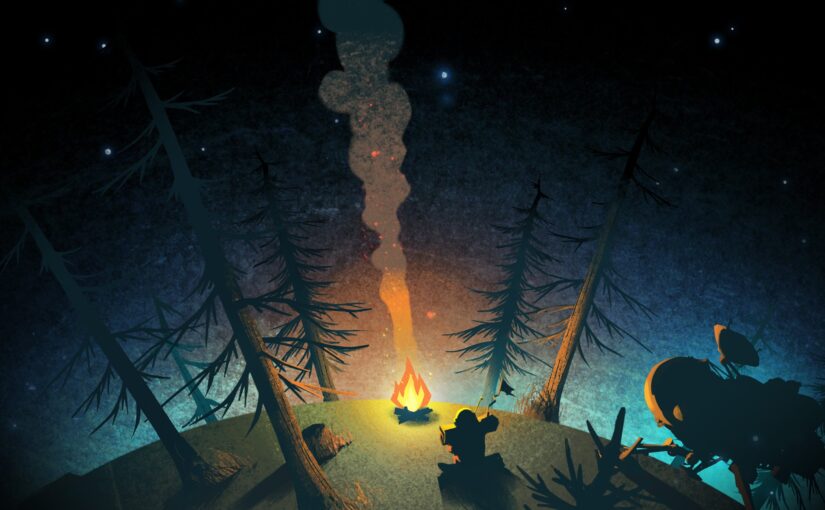
What was beautiful about playing the game on Twitch was the Outer Wilds fans coming out of the woodwork to watch the stream. None of them wanted to drop hints or spoilers. They just wanted to gather around the campfire, whistle an encouraging tune, and roast a couple of marshmallows—while they got to relive the game through someone else’s eyes. I want to do the same for you.

So, that’s it. That’s my review of the game.

I’ll only say this: I’m at a place in life where I’m trying to figure out what my next big exploration is—career, living arrangements, relationships, everything. I picked up the game with a sense of mild curiosity. I put it down awash in the bittersweet hope of new beginnings. This game reminded me that exploration is not an abandonment of the past. It’s a way of honoring it, while embracing a future that can’t be realized living in predictability and comfort. There are marvelous planets to visit, and they’re all within reach.

Play the game, if you feel ready to explore. When you do, I’ll be at the campfire waiting. And I’ll bring the marshmallows.

The FancySchmancy Creature Feature: Frigid

It’s March in New England, which means winter has yet to wane. I spent a few icy days in Boston for a trade show a couple of weeks ago, so it felt reasonable to make the word “Frigid” the theme for the Creature Feature afterwards. Here were the results:

The FancySchmancy Creature Feature: Frigid

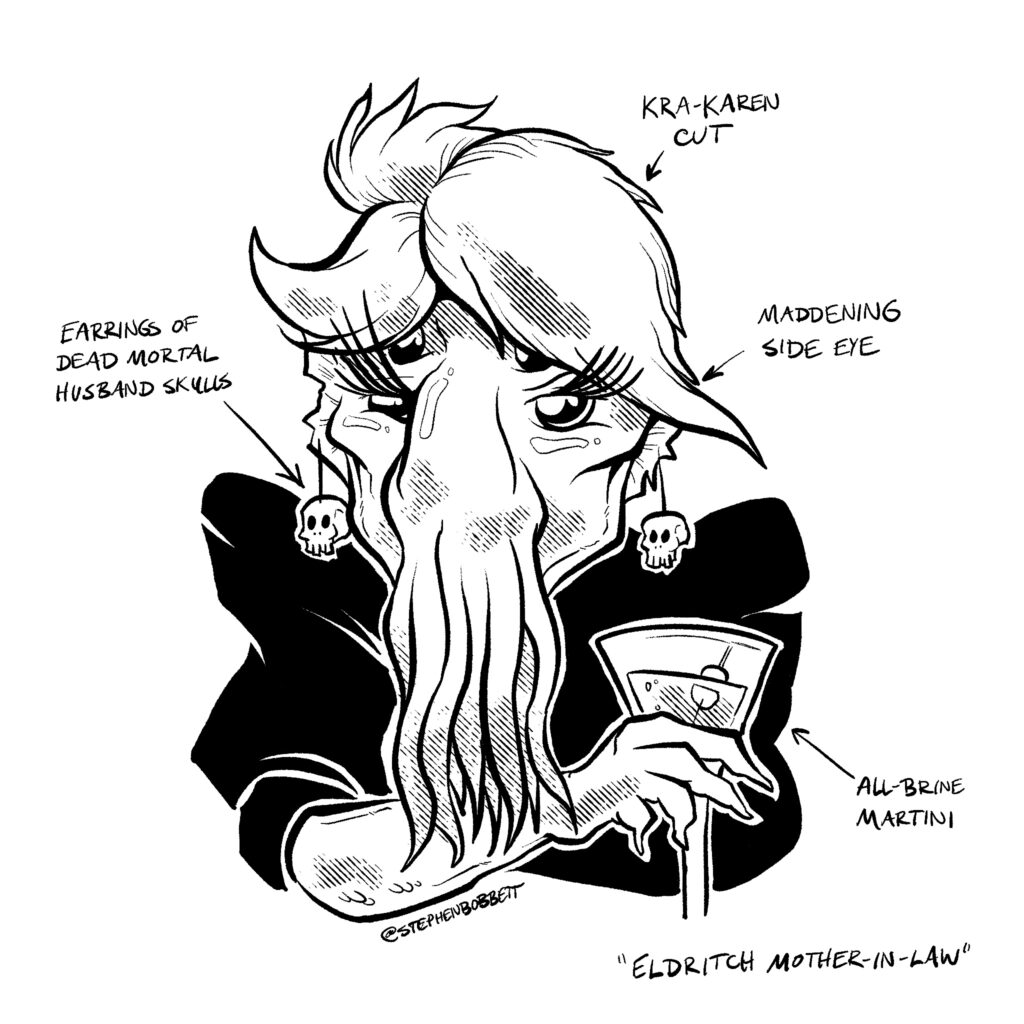
If my avatar were married, this might be his wife’s mom, sure. And who knows, even if she is a little frigid, I like to think they get along.

The FancySchmancy Creature Feature: Frigid

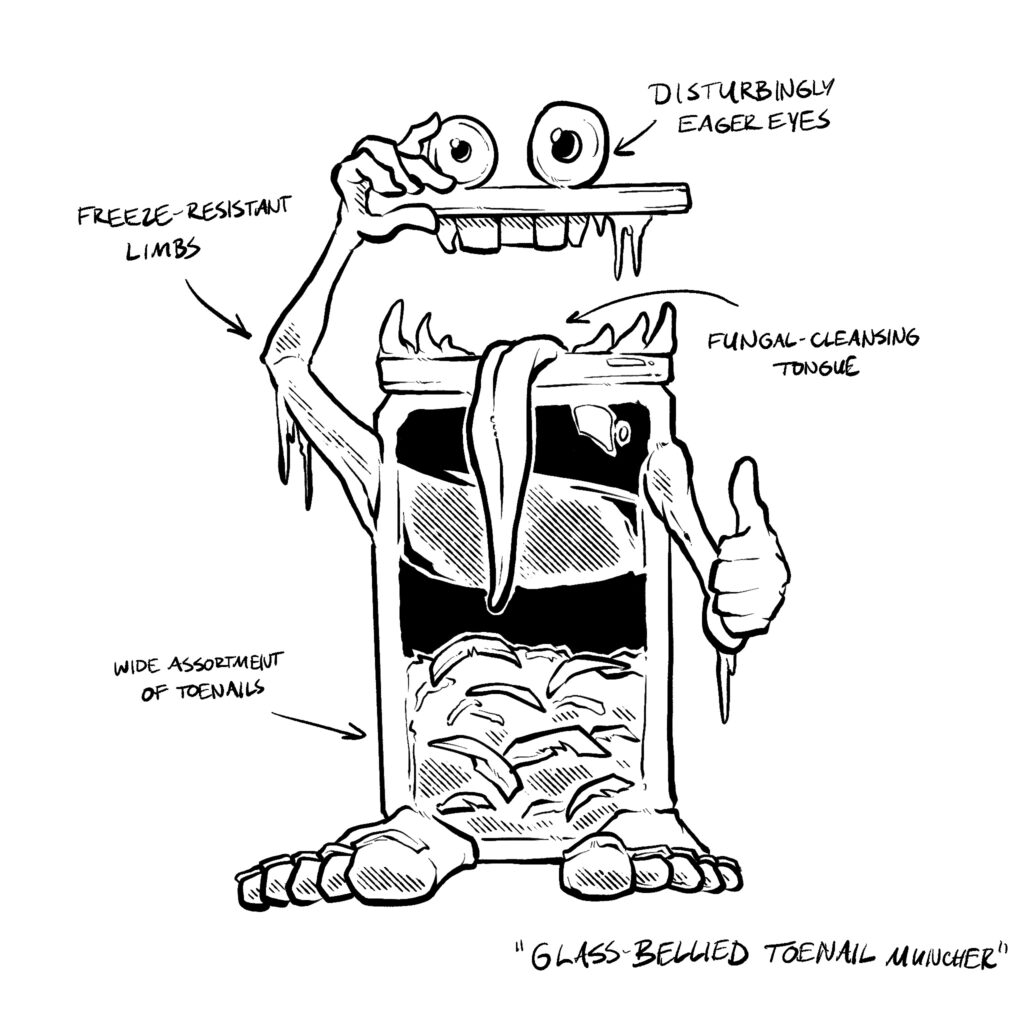
Leave it to my Twitch chat to suggest something foot-related. But it gave me the idea for this amiable mimic who delights in nothing more than savoring your toenail clippings. How is it frigid, you may ask? I don’t know, maybe toenail clippings last longer in the fridge.

Also, isn’t weird that we grow toenails at all? Fingernails I understand, like they’re useful for picking and clawing and whatnot. But toenails feel superfluous, just there to grow fungus and slice your socks up. Anyway, I digress.

The FancySchmancy Creature Feature: Frigid

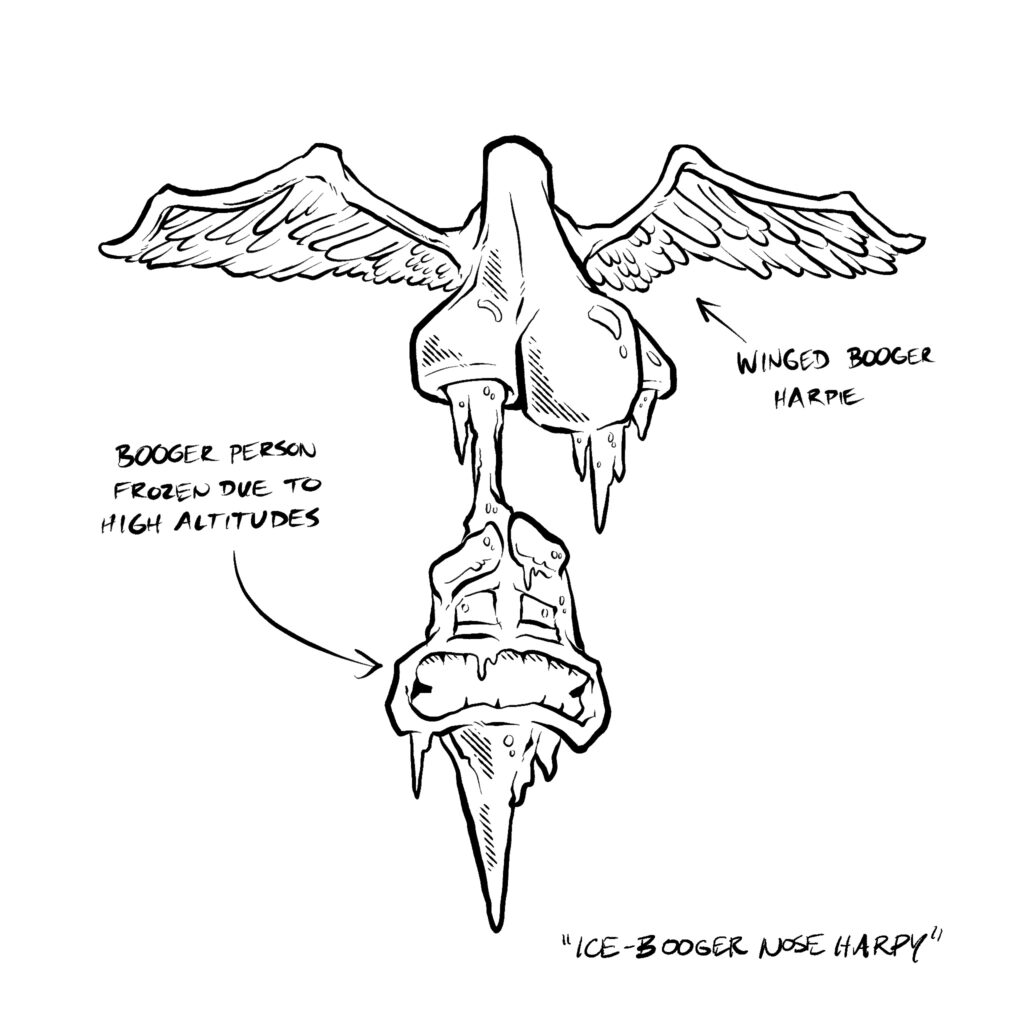
This one was simply based off the word “snot.” In a faraway dimension, there’s a world in which the winged nose harpies flock to more frigid climates to avoid seasonal allergies. While they can weather it with rosy ardor, their snotty offspring fair worse. However, as the nose harpy is one of this world’s apex predators, no one has the courage to let them know they’ve got clingers. So their ice-booger progeny often linger in the nostrils well into adolescence.

I don’t know what I’m writing anymore.

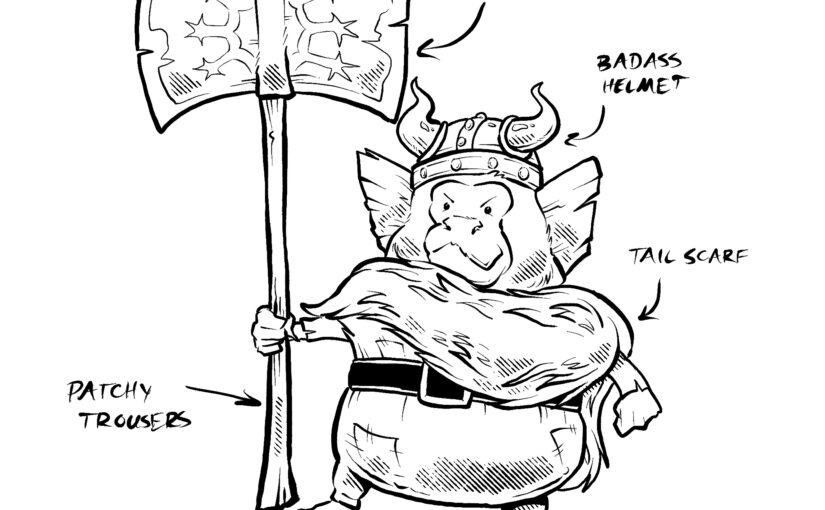
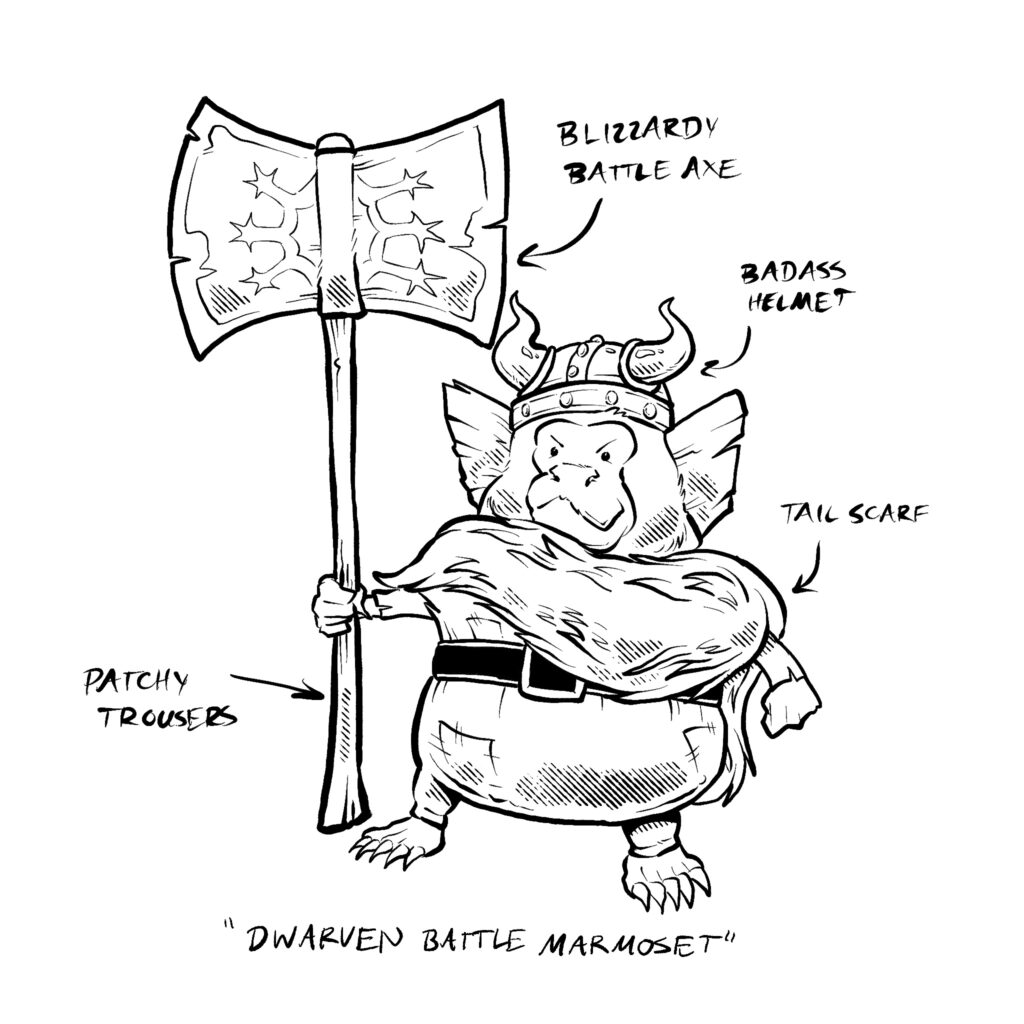
Dwarven Marmoset (Grewsumgary)

In their frozen world, the Dwarven Marmoset clans are the last defense against the ice serpents of the Eternal Tempest. They are known for their ferocity in battle, as well as being just so goddamn cute.

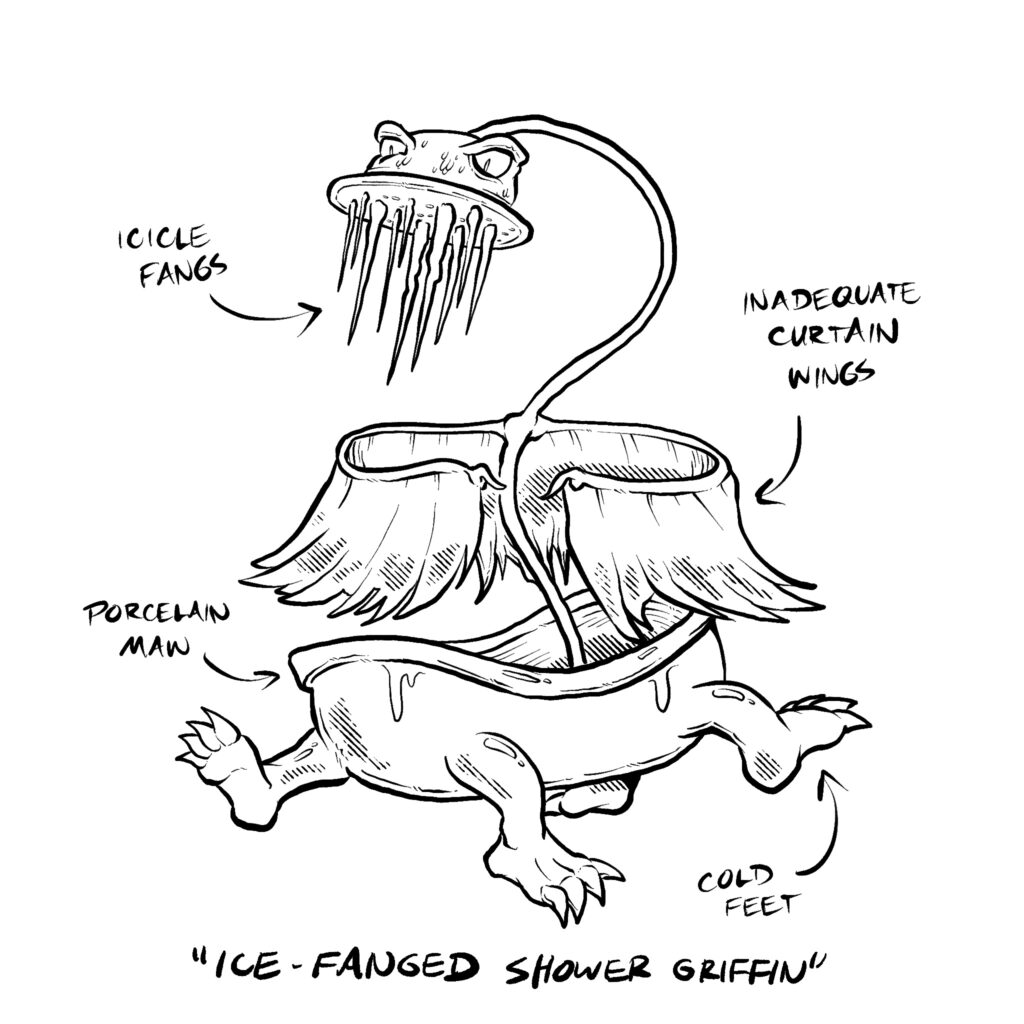
Ice-Fanged Shower Griffin (Nipplepotomus)

Based on the prompt “Shower” by Nipplepotomus. The ice-fanged shower griffin is the natural predator of Twitch chatters who refuse to take the initiative to bathe, instead relying on the streamer to coax them into proper hygiene. Not naming names here.

Join me most Saturdays around 10am EST live on Twitch to submit your prompts and watch me draw more pages in the Bestiary.

The FancySchmancy Creature Feature: Angler Fish

A couple of weeks ago I finished playing the game Outer Wilds, in which angler fish play an outsized and terrifying role. Simultaneously, a black seadevil captivated the world by rearing its beautiful head from the depths, making its way to the surface for unknown (and for some, portending) reasons.

So I thought, what better subject for our weekly FancySchmancy Creature Feature than this fiercely fanged hellspawn?

As always, friends in chat provided me with prompts, and the Bestiary in which we draw selected them at random. Here were the results.

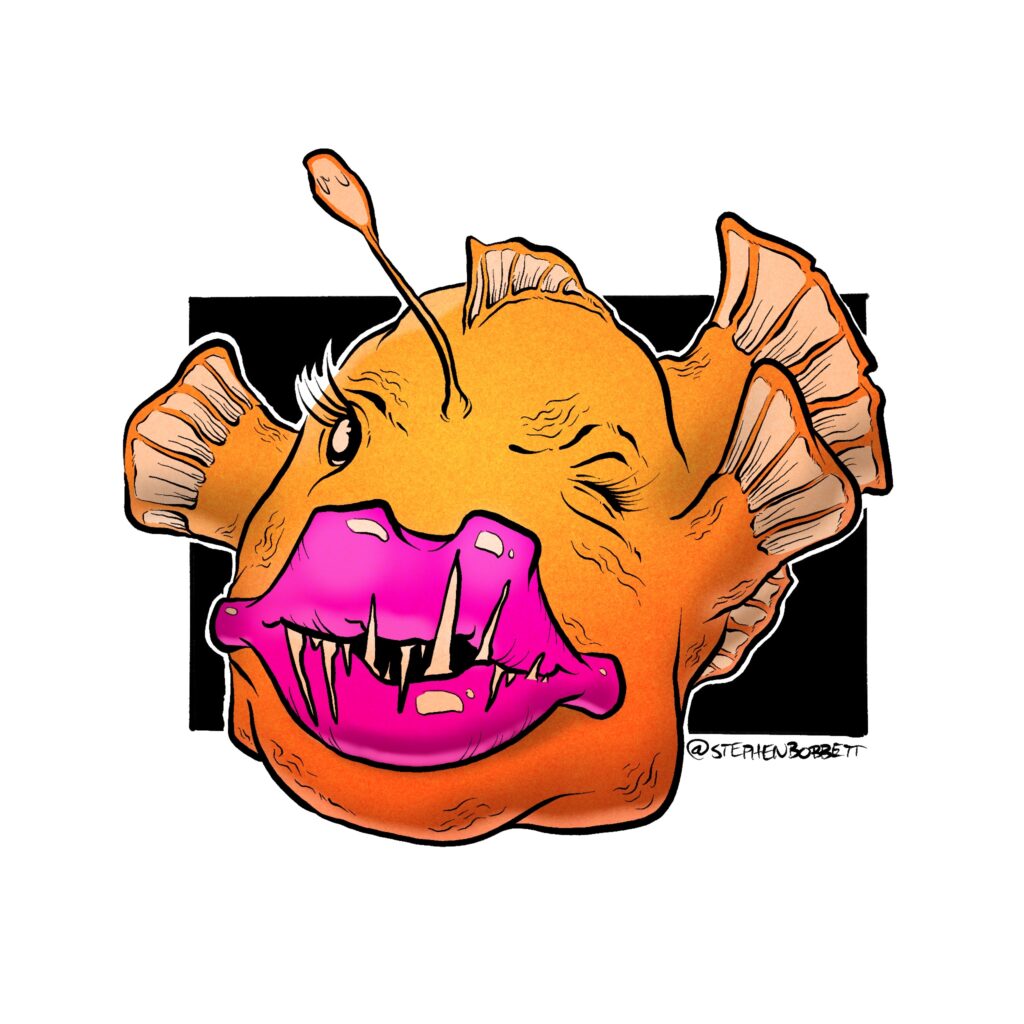
Angler Fish with Lips (CeruleanOak)

This is what I imagine a male angler fish sees right before it merges with the female’s flesh for eternity (look it up).

Angler Fish Bandit (CeruleanOak)

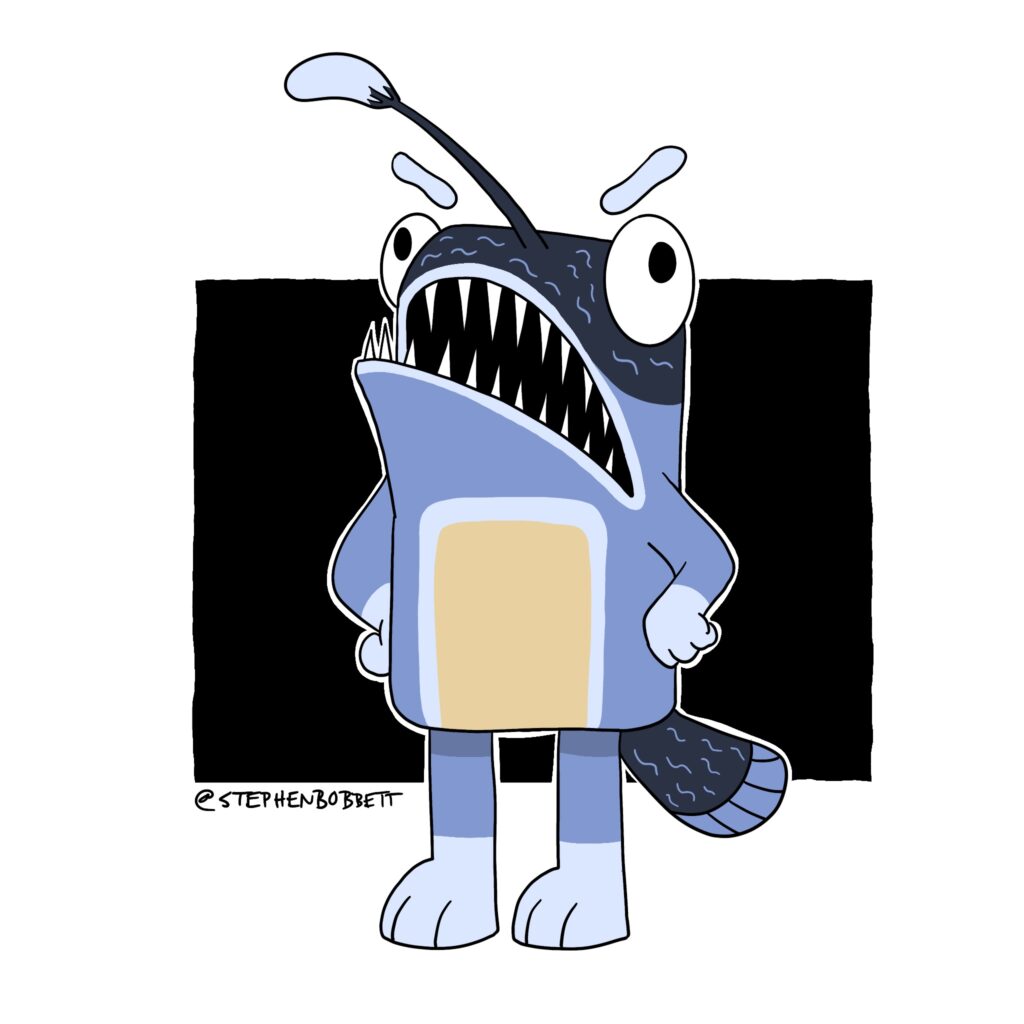
This one charmed me. I like to imagine that this is what Bluey sees when she casts one of her imaginative spells on her dad.

Angler Fish Balatro Card (MrByte)

I’m a big fan of Balatro, and it’s fun to imagine what powers this Joker might imbue for your deck. Maybe it lures you into playing a strong hand that it then destroys. Not advantageous, but it feels on brand for the game.

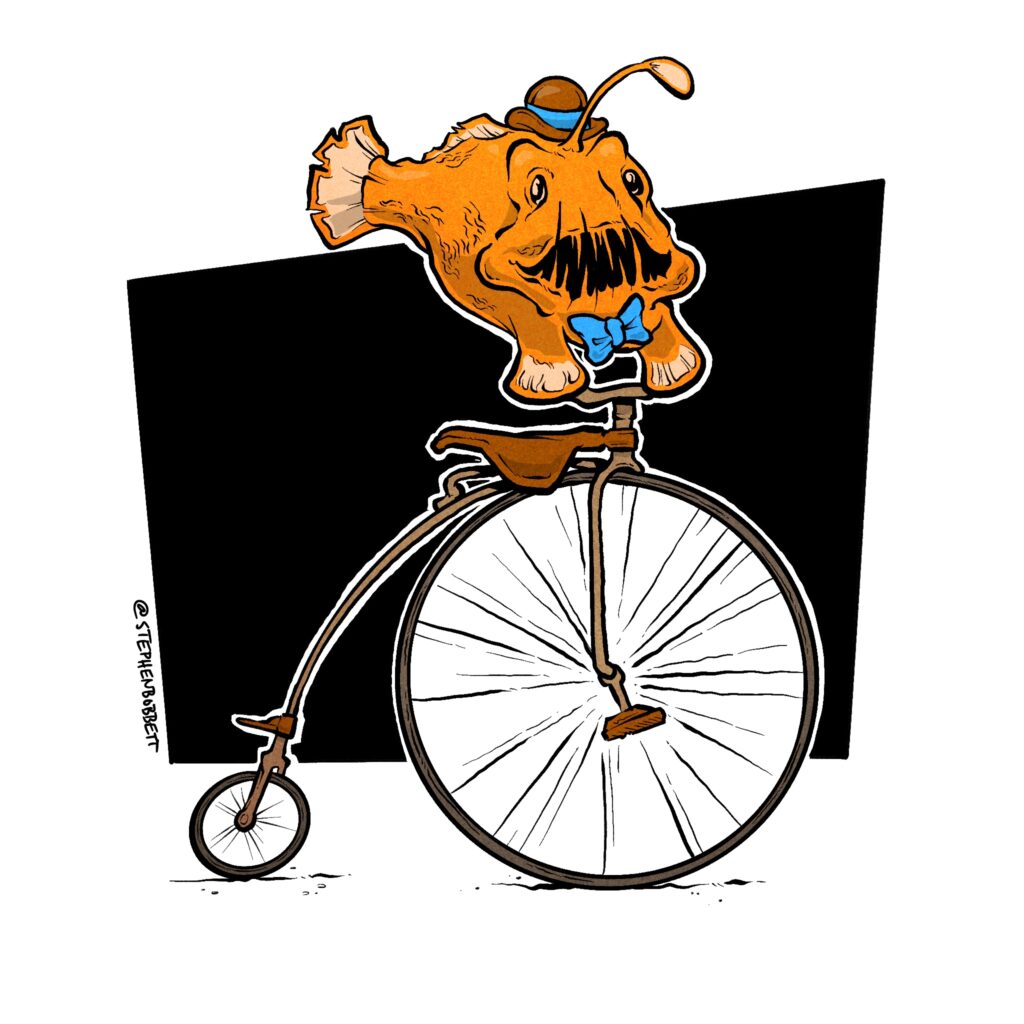
Angler Fish on a Bicycle (PrincessPJs)

I literally cursed the moment I had to draw any sort of vehicle, but as it turns out, drawing a penny farthing isn’t so bad. Plus, look how happy he is.

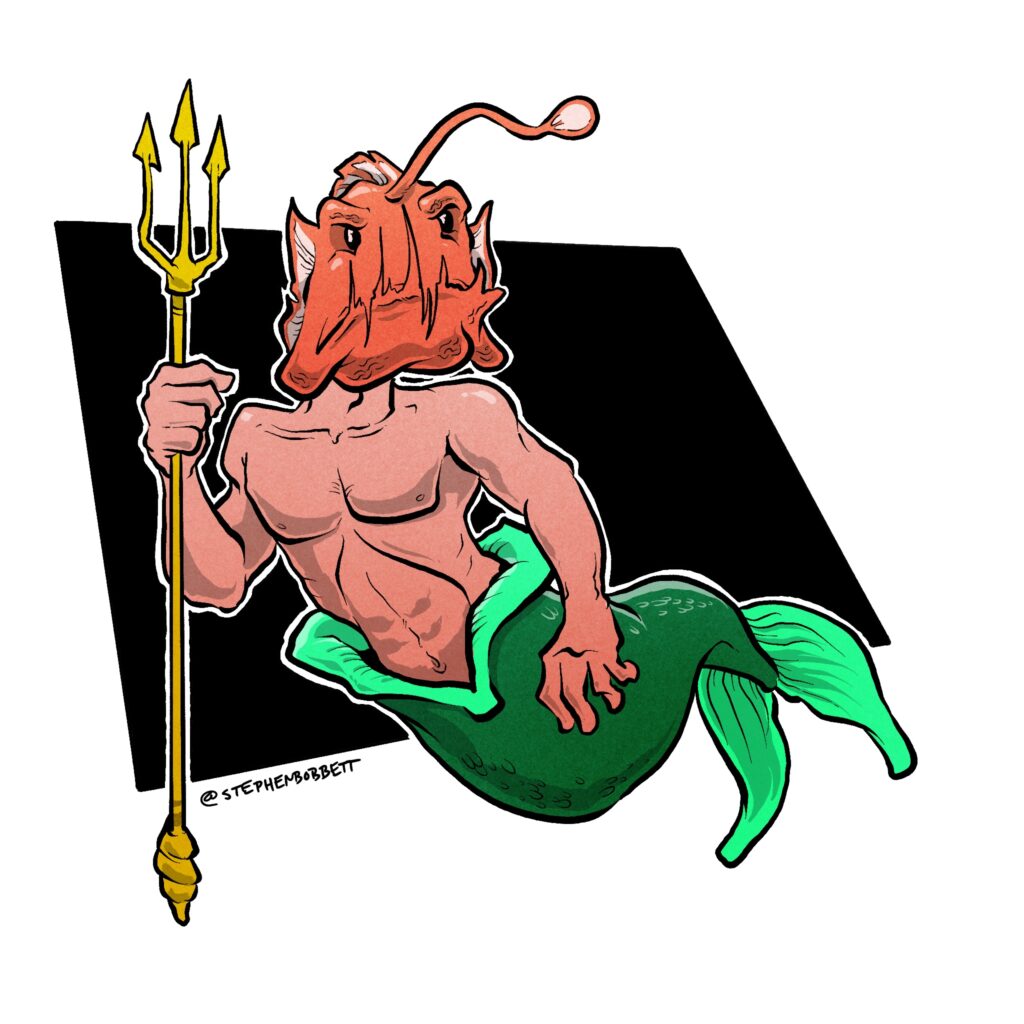
Angler Fish Merman

Finally, we drew a merman with an angler fish head, or as I like to call him, a mermgler. In my head canon, this is exactly what Poseidon looks like.

The FancySchmancy Creature Feature happens on Twitch most Saturdays at 10am EST. I play FancySchmancy, an eldritch scholar on an academic quest to draw an infinite set of bestiaries, chronicling every creature in the multiverse. Each week I pick a theme, chat gives me prompts, and the bestiary picks which prompts to draw. Join me for a chance to have your prompt drawn.

The Gatekeepers Are Not On Our Side

(1,101 words, 6 min read time)

Sometimes I encounter a photograph from American history that burns itself into my brain, like the floaters you get from glimpsing at the sun too long.

To me, these images represent the best and worst of our national spirit. They’re often more obscure than, say, Alfred Eisenstaedt’s V-J Day in Times Square or Dorothea Lange’s Migrant Mother, but they are no less iconic or haunting.

For instance, I love the photo of Margaret Hamilton, a pioneer of programming, standing beside the towering stack of code in 1969 that brought NASA astronauts to the moon. It’s a reminder that, while glory often goes to the explorers, it’s the ship builders, who often exist on the margins, that make their journeys possible.

Similarly I’ll never forget the first time I saw the 1892 photo of two Michigan Carbon Works men standing on top of a mountain of bison skulls. Few photos do a better job representing the heedless slaughter of westward expansion, the callousness with which we as a country starved and displaced indigenous Americans.

There’s another photo that’s entered my head canon recently. Like you, I’m trapped in the amber of the moment it represents, so I don’t know if historians will regard it as prophetic as I do. But for me, it’s the bursting bulb at the end of our thermometer—an indication that our nation’s fever has gone through the roof.

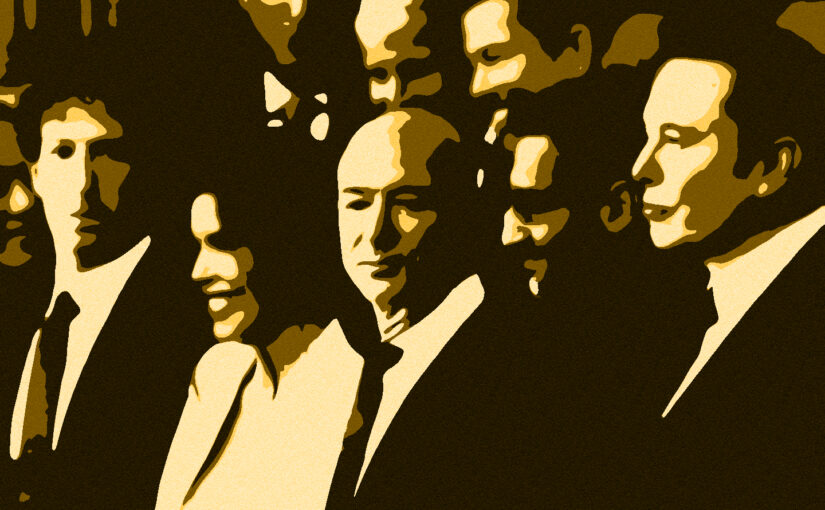
On January 20th, 2025, Donald Trump was inaugurated as the 47th president of the United States. Photographed by Julia Demaree Nikhinson, in the front row of the ceremony were Mark Zuckerberg (CEO of Meta), Jeff Bezos (CEO of Amazon), Sundar Pichai (CEO of Google), and Elon Musk (CEO of X). Elsewhere off-camera were Tim Cook (CEO of Apple) and Shou Zi Chew (CEO of TikTok) padding out the numbers with their modest billions. Altogether their net worth is roughly a trillion dollars, rivaling the net worth of all but about 40 countries.

These are the Technocrats, the robber barons of the technological era. Their social media platforms, web hosting services, and streaming channels hold our attention in captivity. Less innovators than conquistadors, they have subdued every competitor and cornered every market. And here they were, taut smiles as they stood shoulder to shoulder with their last remaining rivals.

It was unclear to me if they were at the inauguration to be his courtiers or his puppet masters. But as they stood in places more prominent than Trump’s own cabinet picks, one thing was for certain—a fact we have always known but have chosen to ignore for half a century.

The gatekeepers are not on our side.


A couple of years ago, I was reading Dan Simmons’s novel The Fall of Hyperion, in which human civilization has expanded into the stars. People traverse the galaxy through portals called farcasters, which make interplanetary travel as easy as stepping through a door frame.

But these portals come with a price. They were created by the TechnoCore, a collective of sentient AI programs that had seceded from human servitude. In theory, the farcasters were their peace offering, but later we learn they were a fishing lure. It turns out, each time a person steps through a farcaster, the TechnoCore is hijacking their neurological hardware, using it to accelerate its own processing ability in its quest to build the Ultimate Intelligence.

When I read The Fall of Hyperion, I couldn’t help but think about the persistent paranoia we’ve had about the internet since its birth. I was ten-years-old when I first logged onto Prodigy, one of the original dial-up ISPs. At the time, it was magic. I could enter a forum and chat with stranger in other continents. I could orchestrate and share my own MIDI files like a schlocky Millennial Mozart. I could publish stories and essays and poems instantly, the envy of historical author before me, only my works of great literature came with tacky Looney Tunes animated GIFs in the background. And when I wanted to, I could get lost on an endless sea of knowledge, adrift in the luminous synapses, no map or compass required.

But there were always sea monsters lurking beneath the surface: scams, viruses, stalkers, advertisements, and (most significantly) specter of mass surveillance. It was a truth that would infect the zeitgeist of 90’s science fiction—one that did, I think, inspire the idea of farcasters and the TechnoCore in Dan Simmons’s novels. Famously The Matrix—probably the most formative sci-fi movie of my lifetime—portrayed online life as a pacifying ruse injected into the brains of humans, who lived their entire unconscious lives in uterine pods so AI machines could harvest their bio-electricity. As long as the internet has existed, we have feared the tendrils of surveillance capitalism that might invade our psyches, even as we gladly welcomed them.

And here in this photo are leviathans of the internet—wealthy beyond imagination, powerful beyond comprehension—the eldritch beasts who pluck at the tapestries of our shared digital reality, cresting from the depths to congratulate a president who has promised them a new Gilded Age.


It’s not hard to imagine why Zuckerberg, Bezos, Musk and the others were at the inauguration. Rich men want to get richer, and there’s no quicker way to wealth than to align yourselves with power. But the presence of these rich men in particular, the technocrats, is foreboding.

I’ve believed for years now that information technology has nowhere else to grow. The fevered pursuit of things like virtual reality and generative AI are nothing more than smoke screens, distracting investors for a couple more fiscal cycles while tech companies scramble behind the curtains to build anything new and useful. It’s the constant bait-and-switch of an industry—of an economy—built on the concept of infinite growth. And they’re running out of parlor tricks.

The gatekeepers weep, for there are no more worlds to conquer. They’ve sold every farcaster they can in the private sector. The only solution now is the public sector: stripping agencies of regulatory power, and siphoning taxes through government contracts, so they can build on what were once untouchable planets. Together they will glean unspeakable amounts of data from us, as they literally try to build their own Ultimate Intelligence—until, presumably, they reach a point of infinite value derived from zero labor. Capitalism distilled to its purest form.

I don’t know if Nikhinson’s photo will end up in the history books. But I hope it marks a moment for us, to realize that our relationship to infotech must change, before the monsters behind it eat us alive.

Gulper Eel

When I don’t know what to draw, I draw fish.

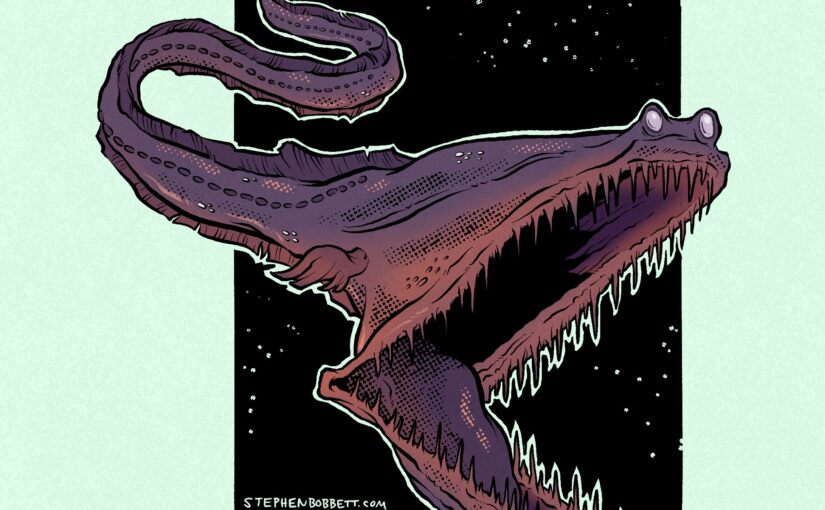
A few days ago, I used a random fish generator to give me a species, and it gave me the gulper eel. This eerie deep sea dweller has a set of jaws that make up a quarter of its roughly meter length, which it uses to sweep up small crustaceans. And since it’s the Christmas season, it’s got a red bulb on its tail for luring play.

We’ll call him Rudolph the Red-Butt Wriggler.