Broken and Known

A digitally illustrated mandala of telescopes, agave shrubs, and socks in a tumbling laundry

Of all the places to be seized by revelation, I didn’t expect it to be the Wash & Go Laundromat in Redondo Beach, California.

I’m on the West Coast for work, but also for reconnaissance. This past week, I’ve been trying to learn videography as rapidly as Neo learning kung fu. I’m attempting to give our company a healthy dose of modern digital marketing, filming the shoe wear testing process at our biomechanics lab in Los Angeles, and proving to our team we have the internal capacity for webinars, TikToks, and podcasting.

I’ve also been staying at a friend’s studio in the back of their house near Hermosa Beach, testing the waters of a move back to this side of the country.

I miss Southern California. Like, a lot. Yeah, the traffic sucks, and shit’s expensive, and the city sprawl is as thick as kudzu. But I have tried to replenish the word “home” in my brain with at least seven other states in the Union, and none of them fill it to the brim like this one does.

Last time I lived here was in 2008, right when the Great Recession was revving its engines. It was not a great time to be a college graduate in the City of Angels with only an inkling of a career path. I made the right choice at the time (that is, after a brief and impulsive move to the Pacific Northwest that led to a nervous breakdown, but I digress). I moved to the East Coast, where there was extended family and a semblance of stability. And for at least a decade, it remained the right choice.

But stability isn’t always growth, and historically, California is where I’ve come to grow. It’s where my first memories were forged, combing shells on Newport Beach as a little blonde-haired kindergartener when my family lived in Costa Mesa in the 80’s. It’s where I came back when I left home after high school in the Midwest. I got my bachelor’s degree in Azusa, had my first kiss in Pasadena, got hired for my first marketing gig in the Arts District. The decade or more I collectively spent in California was arduous sometimes, but it was nourishing, like how a shrub thrives in the desert.

And now, at the end of a long but fruitful week of shoe footage, I find myself doing laundry at the Wash & Go in Redondo Beach, getting ready to fly to a trade show in Portland. A song comes on the radio. It’s “Iris” by the Goo Goo Dolls.

This song. I think I first heard it when I was living in Indiana at 16, driving back and forth between home and my summer job as a kitchen manager at a youth camp. The last gasps of radio before MP3s nearly drowned it.

There’s a bit of trivia about this song that’s never left my brain’s disheveled archives. When it was written, the lead singer and songwriter John Rzeznik was suffering from a year-long case of writer’s block. Just when he thought his career might be withering, he got a call to produce a song for the movie City of Angels. And he determined that no matter what spilled onto the page, no matter what he felt about it, he would commit to it wholeheartedly.

He wrote the song in one day, like a primal scream. The song was so ubiquitous—and the word choices were so elementary—that it was easy to overlook the earnest tension on display in the chorus:

And I don’t want the world to see me‘
Cause I don’t think that they’d understand
When everything’s made to be broken
I just want you to know who I am

In the music video, Rzeznik swivels on a chair in a lonely tower above the city, peering through a series of steampunk telescopes at a world he either can’t or won’t participate in. In the context of the lyrics, he’s a man torn in two: anchored to his isolation to protect what he perceives as grotesque injuries to his soul, but wanting to risk exposure to people so his soul might have a chance to flourish. It’s not unlike a songwriter in the throes of writer’s block, torn between latching his heart shut or opening it up to the world.

And it’s not unlike a single man with no kids at a transitional stage of his career, torn between the two coasts that, respectively, now offer the same prospects of stability or growth they always have in his past.

The song ends. The washing machine comes to a standstill. The clothes stop tumbling. An empty dryer awaits them.

It might be time for a transfer.

We Shouldn’t Need Another Statue

A couple of weeks ago, I was on vacation with my family in Ireland. During the last few days, we stayed at a hotel right on the River Liffey, and near us was a series of bronze statues by Rowan Gillespie called Famine. The statues are stark, melted figures—reminiscent of Munch’s The Scream—depicting Irish refugees of the Great Famine departing for American shores in the mid-1800’s. Gillespie unveiled the statues in 1997, and shortly after in 1998, the City of Boston, which is the closest metro to me, commissioned Robert Shure for a similar work, memorializing the arrival of those same refugees.

I don’t have any Irish ancestors to speak of, although if you ask my dad, we’re more Irish than James Joyce. He took a 23andMe test years ago that, according to him, says he’s over half Irish. I’ve always had my doubts about this, given that 23andMe seems to lump British and Irish results together without much distinction. And unfortunately for Dad, his son is prone to hyperfixation. So I spent the better part of an evening building my family tree, to see if any Irish immigrants were, in fact, sitting in its branches.

Turns out, most of my Dad’s side of the family has been American for a long time. I found long lines of New York agrarians and Tennessee hillbillies. He did have great-grandparents who emigrated to New York from a town called Wookey Hole in Somerset, England, which sent me on a tangent learning about the fabled witch who once lived in its caves. (Years ago I learned that I’m a descendant of Rebecca Nurse, the last woman to be convicted in the Salem witch trials. There’s a theme in this family, apparently.)

Lots of fascinating leaves in the tree. But no Irish progenitors to be found.

My Dad’s belief in his Irish heritage is shared by over 30 million Americans. In a place like Boston, with its long history of Irish immigration, it’s likely true for many people. But I doubt it’s true for everyone. It gets me thinking about why so many Americans are obsessed with finding an Irish connection. Culturally, I get it. The art, the music, the libations—so much Irish culture is interwoven into American life, especially in the Northeast, that it’s not surprising people want to imagine it’s their birthright. But there’s nothing wrong with just enjoying—even participating in—a culture without being native to it, and I’ve yet to meet a bona fide Irish American who didn’t want to freely share it. I think it’s something else that makes us white Americans long for Irish heritage. And I think it has much to do with guilt.

When my dad first mentioned his DNA results, I asked his mom about it. His dad’s lineage is demonstrably English, so she would be the most likely conduit for any Celtic roots. She wasn’t certain, vaguely mentioning a family acquaintance who might have visited from Ireland when she was a young girl in the 30’s. But she did remember distinctly the signs reading “No Irish Need Apply” in the windows of shops that were hiring in her Midwestern town, and how sad it made her that people would treat the influx of immigrants that way.

“No Irish Need Apply” is mentioned on Shure’s memorial as a phrase that appeared frequently in Boston, a town that now embraces its Irish heritage with fervent pride, despite its initial hostility. I think this is instructive of why so many Americans want to claim Irish heritage, even if they can’t prove it. None of us want to think of ourselves as descending from the oppressor. It brings with it a specter of guilt we either feel is undue or don’t know how to reconcile. Rather than grapple with it, I think a lot of us would rather rewrite the narrative to claim we were part of the oppressed, especially if we can do so under the cover of a vague ancestry test.

To be fair, I don’t think was my dad’s motivation. As someone who lived abroad most of his young life, I think he just has an abiding love of immigrants in general. I think a lot of natural-born Americans crave the inherent dignity of being an immigrant. To immigrate to America is to pursue a radical faith in merit—the belief that under the stars and stripes, one’s hard work can reap the reward it deserves. Maybe that’s why so many natural-born Americans also resent them: often the superior patriotism and work ethic of the immigrant undermines their claim that their blessings due to merit, not inheritance.

We don’t have to reach for non-existent ancestry, Irish or otherwise, to honor the dignity of immigration. We can do it—we must do it—now by demanding it from our legislators, especially as the administration seeks to demonize and persecute them. The signs no longer read “No Irish Need Apply.” They read “Mass Deportations Now,” and they are being wielded with the same gleeful, banal cruelty as during the fallout of the Great Famine.

I don’t want to give mournful sculptors any more reasons to build statues. There’s one standing on Ellis Island now, torch in hand, welcoming the foreigner to our shores. For the near future, let her be the only one we need.

No Web Left to Conquer

A few years before the pandemic, the chamber of commerce for my quaint New England city sent its bohemian enclaves into an uproar. They were proposing a promo campaign to draw more businesses from out of state. The main image was a cloud of cute, lineal drawings of laptops, kayaks, and to-go coffee cups—the digital nomad lifestyle craved by the tech workers of the late 2010’s. The slogan read something like “Tiny Big City,” the promise of urban amenities without the overstimulation of Boston or New York.

The vibe of the campaign was sterile and innocuous. But anyone with a keen cultural nose knew, this was the beginning of the end. The gentrification cycle was nearing completion: an old port city whose original industry had dried up was now a target of conquest by the wealthy, thanks in part to the artists and tastemakers who had made it an appealing place to live for the last couple of decades. Slowly but surely they would be muscled out by soaring rents as luxury condos devoured the market. The same would be true of many independent pubs and shops, clearing the way for familiar franchises awash in out-of-state capital.

The day I knew there was no going back was when I was sitting in a coffee shop, eavesdropping on an older couple from Connecticut, talking about buying a home in town so they could summer there. When you hear a newly inducted local use the word “summer” as a verb, you know it’s game over.

I wrote yesterday that it might be game over for the internet, too, at least when it comes to its major platforms. Thanks to things like Google Veo 3, generative AI has reached a threshold where it requires a lot more scrutiny to discern than most algorithms give us time for—let alone what most modern attention spans are equipped for. GenAI has absorbed enough of humanity’s collective endeavors that it can effectively walk around in our skin, with only the most anal-retentive sleuths able to call its bluff.

What makes Google Veo 3 truly foreboding, though, is not just its uncanny facsimile of human-born imagery, but also its $250-a-month price tag. Like an old port town renovated by the creative class, tools like Google Veo 3 are trained on untold billions of hours of human ingenuity, only to be gated and sold for the wealthy’s unfettered use—gentrification in its most resource-hungry and accelerated form.

I don’t have high hopes for the future of this new, gentrified internet. At best, corporations and content creators will succumb to the siren’s song of cheap, predictable labor, and culture will begin to stagnate. At worst, propaganda will become more virulent and convincing than it’s ever been, as the forces of oligarchy drip poison in the well of political discourse.

The real mystery is, what happens when genAI has nothing left to consume? Already it runs the risk of becoming a self-diminishing ouroboros, devouring its own outputs. The disingenuous push of the Technocrats against IP laws is a testament to this fear, as they look for the last remaining scraps to put in the belly of their beast. What frontiers are left, when even the settled places have been recolonized?

Sooner than later, genAI will have no web left to conquer. Maybe then the internet will weep, longing for the grit of originality again.

The Fancyrithm: March 7, 2025

Like you, I’m getting tired of bad algorithmic recommendations. So I’ve devised my own: the Fancyrithm. This algorithm exists only in my brain, and it has only two filters: 1) media I enjoyed last week, and 2) media I think is important enough for you to enjoy, too. Without further ado, let’s run the Fancyrithm for March 7, 2025. Here’s its inaugural output.

1. Lady Gaga’s “Abracadabra” Music Video

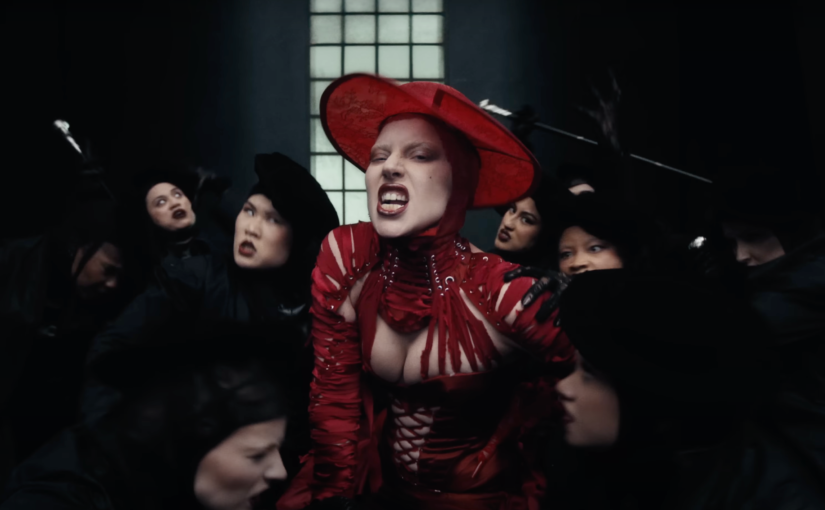
Lady Gaga is an artist who’s mostly remained on the periphery of my playlists, but I’ve always appreciated her strength as a performer and the surreal grit that flavors her pop music. When she released “Abracadabra,” I suddenly regretted not making her more central to my usual repertoire all these years. This video reminds me a little of the class-conscious horror narratives that creep out of Gazelle Twin‘s music—even down to the costume similarities of Gaga’s blood-tinged matriarch and Gazelle Twin’s unsettling red jester. Given “Abracadabra” and “Disease,” it’s safe to say the album Mayhem will be my hyperfixation when it releases today.

2. Ed Zitron’s Interview on Adam Conover’s Factually! Podcast

Ed Zitron is a former games journalist, now outspoken tech critic, whose newsletter Where’s Your Ed At? reads like the sermons of John the Baptist prophesying doom in the digital desert. In my Discord, he’s become a patron saint of a channel devoted to enshittification, where we post stories mourning the rapid decay of the internet. Recently he appeared on Factually! with Adam Conover, one of my favorite podcasts, to rant about the failed promise of AI and how it’s being shoehorned into everyday life—not to solve the problems of consumers, but to perpetuate the infinite growth model of tech companies that, in the end, is an ouroboros that will eat itself alive.

Zitron is coming out with a book in late 2026 called Why Everything Stopped Working, but until then, I can’t recommend his newsletter enough.

3. The Movie Conclave

Oscar season holds no fascination for me (except that once there’s a super cut of Conan’s jokes on YouTube, I’m sure I’ll be indulging). But the Best Picture category does give me a solid yearly menu for movie watching, and for me Conclave was inevitably going to be the main course. I watched this movie as all great films should be seen, of course: on a touchscreen embedded in the back of an airplane seat with disposable aux-cord headphones, reeling from week-long jet lag. Add a bag of popcorn, and you’re practically in your local multiplex.

Like a version of 12 Angry Men set in the Vatican, Conclave follows the intrigue surrounding the suspicious death of the Pope, and the political maneuvering of the cardinals hoping to replace him. It’s a tightly scripted mystery with stratospheric performances from the acting titans who fill out its roster, and it serves as an emotional, microcosmic analogy for the philosophies that govern power.

4. Drew Gooden’s “Technology isn’t fun anymore” Video Essay

On the heels of Ed Zitron’s Factually! interview, Drew Gooden’s video essay on the death of technological fun is a little more whimsical. But it’s no less of a lamentation about the state of technology, compared to what felt like the halcyon days of growing up Millennial. Gooden muses on the crumbling functionality, hostile UX/UI designs, pervasive ads, unnecessary SaaS models, and predatory surveillance that plague the internet and its technologies in the 2020’s. If there’s a ray of hope in the essay, it’s that we may be retreating to simpler technologies that do the unthinkable: solve a real human problem at a reasonable market price.

Thanks for reading, and I’ll have more Fancyrithm outputs to serve up next week.

Hope, Horror, Heartache: A Review of Outer Wilds

There’s a part of me that doesn’t want you to read this review of Outer Wilds. It’s not because I didn’t enjoy the game—in fact, it’s one of the best I’ve ever played—nor is it because I’m shy about sharing my experience with it. It’s just that if you haven’t played this game yet, the best thing I could do is just to encourage you to play it—and say nothing after that.

Here’s everything I knew about Outer Wilds before I played it on Twitch over the course of a few weekends. It was a game about space exploration. My friends who have great taste in games were in love with it. And it was 80% off during a Steam sale, which is akin to a siren’s song for Steam users. Other than that, I had as much knowledge as a newborn baby. It’s that state of ignorance that I want to preserve for you, because you deserve to feel this game without the numbing awareness of spoilers.

The good news is, the game’s story is almost impossible to spoil. Discovery is the heart of Outer Wilds, and the narrative can only be pieced together by forging a path for yourself. But even speaking about the emotional impact of this game runs the risk of spoiling something. Suffice it to say, the game runs a full gamut of wonder, terror, panic, humor, and heartache. You’ll want to play it with the pliability of clay, formless at the start, shaped and forged into something unique by the end. The game in turn will reward you with exploration as linear or tangential as you want it to be—for better or worse.

What was beautiful about playing the game on Twitch was the Outer Wilds fans coming out of the woodwork to watch the stream. None of them wanted to drop hints or spoilers. They just wanted to gather around the campfire, whistle an encouraging tune, and roast a couple of marshmallows—while they got to relive the game through someone else’s eyes. I want to do the same for you.

So, that’s it. That’s my review of the game.

I’ll only say this: I’m at a place in life where I’m trying to figure out what my next big exploration is—career, living arrangements, relationships, everything. I picked up the game with a sense of mild curiosity. I put it down awash in the bittersweet hope of new beginnings. This game reminded me that exploration is not an abandonment of the past. It’s a way of honoring it, while embracing a future that can’t be realized living in predictability and comfort. There are marvelous planets to visit, and they’re all within reach.

Play the game, if you feel ready to explore. When you do, I’ll be at the campfire waiting. And I’ll bring the marshmallows.