
The Gaping Maw of Google

The open internet might be dead, and Google might have killed it.

Last week my coworker sent me a TechCrunch article about how Google Search, at least as we’ve known it for the past 25 years, is over. At the most recent Google I/O conference, Google announced an “intelligent search box” that, for an increasing number of inquiries, will use AI to generate not just responses but entire UX/UI modules. Gone will be the classic ten blue links, although they’ve been so buried under sponsored results and LLM summaries for the past decade that, in all practicality, they’ve been suffocated already.

The implications for the internet as a whole seem pretty dire. Google spent ages suppressing other indexing sites, absorbing parallel entities and paying companies like Apple $20 billion a year to make Google the default search engine in Safari browsers. The result was Google Search becoming the gatekeeper for most internet traffic. And in short order, they will be closing those gates, demolishing the digital roads we’ve built over this past half a century, and using the scrapped asphalt to build their own giant cul-de-sac.

People are talking about this in apocalyptic terms, and I tend to agree. This is an internet where the world’s most dominant search engine no longer does what a search engine does, which is link out to other sites. Instead, it siphons data—and with that data, value—from all of us who make content on the internet. And I mean all of us, everyone from influencers and journalists and artists, to senior marketing staff at Fortune 500 companies. We all become serfs toiling in the fields that, whether we like it or not, our liege lord Google will reap for themselves—with no guarantee they will share in the harvest.

The age of the “clickless” search is upon us. Unless internet users claim greater agency over what search engines they use, the act of building, maintaining, and supplying content for a site will just be stocking a warehouse for which Google is the only vendor.

Ironically, if we indulge this avarice from Google, it will destroy the incentive to create on the internet in general. The less traffic going to our websites, the less content we’ll likely create for those sites, and the less food the hungry maw of Google will have to feed on.

The open internet might die. But if it does, it might just take Google with it.
Cough and Turn Heads

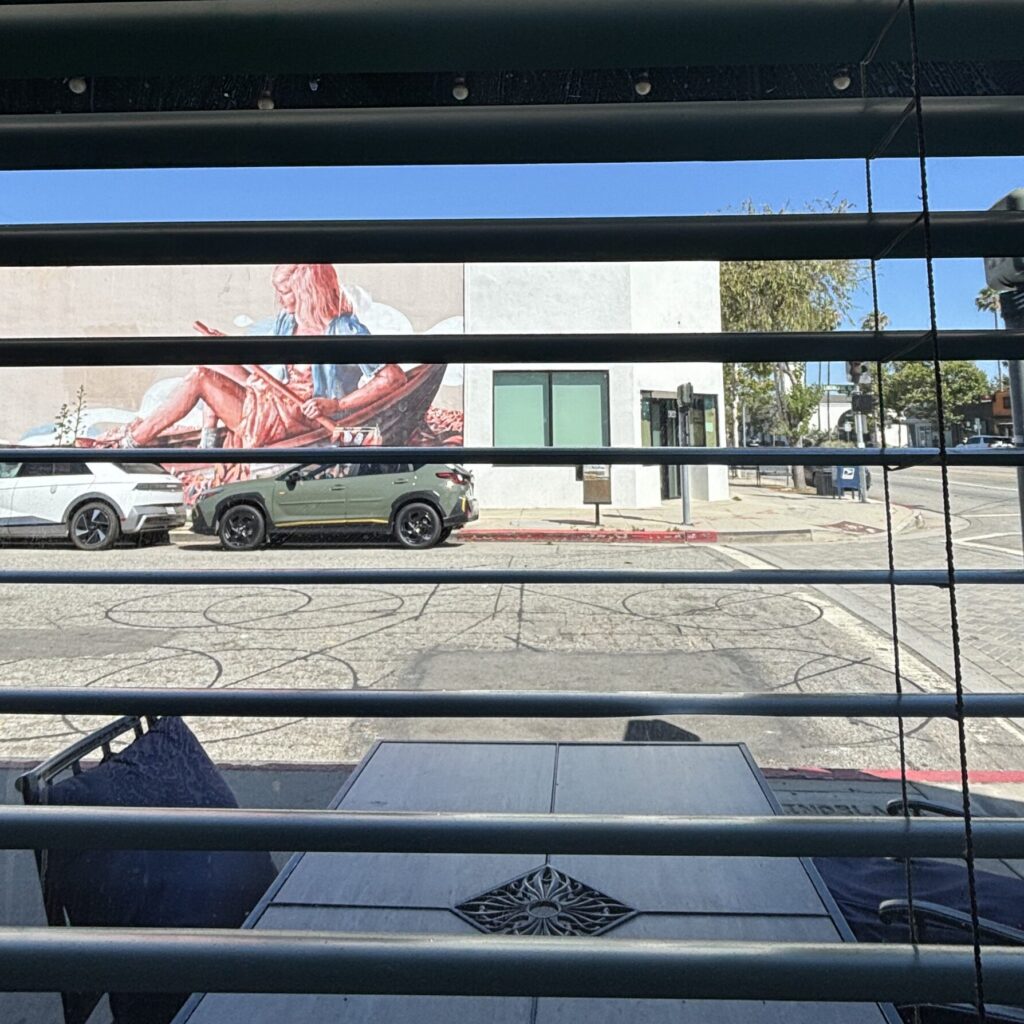
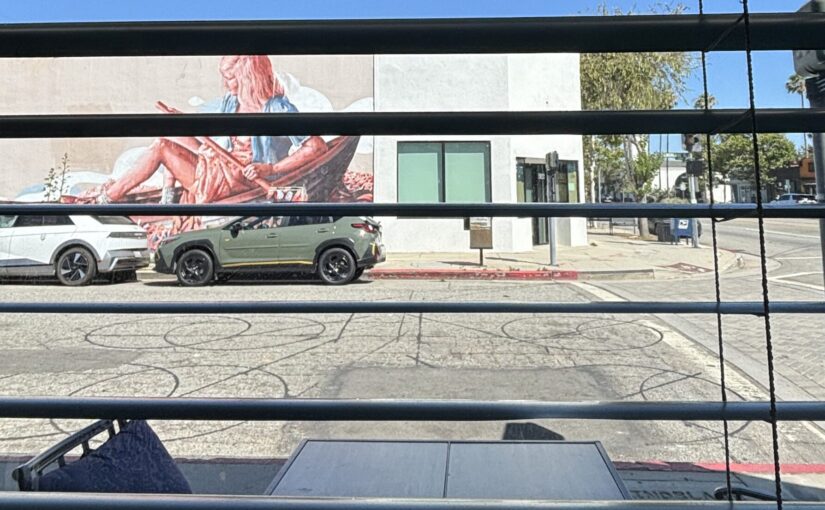
The view outside the coffee shop

Since the pandemic, I’ve become super paranoid about coughing in public. It doesn’t matter that years of working as a bartender have trained me like Pavlov’s dog to bury my face in my elbow when I feel the slightest tickle in my throat. Now I’m afraid that any cough, no matter how sanitary, is going to cause heads to swivel and start screeching at me, like I’ve awoken the bodysnatchers.

I’m staying in Culver City for the next few weeks, settling on an apartment in Los Angeles for an upcoming job transfer. Today I was at a coffee shop, typing away on a PowerPoint for work, when I felt the ol’ throat tickle.

I’d forgotten just how dry Southern California is, and my late afternoon latte was not hydrating me the way it should. Not to mention I’d just gotten over a cold. I needed more than just one cough. I needed a cornucopia of coughs. A veritable smorgasbord. A whole Thanksgiving feast of them.

The shop was about to close anyway. So, while the tickle in my throat became a rapidly growing bramble patch, I calmly shut my laptop, placed it gingerly in my backpack, and slid quietly off my stool. As I did, the bramble patch caught fire.

The noise that emanated from my chest was incomprehensible, like being confronted with a visage of the Holy Trinity. It had the resonance of a burp, a hiccup, and a sneeze—embodying none of those sounds and all of them at once. If I had to summon it again, I don’t think I could.

I didn’t stay long enough to see anyone’s reaction. For all I know, nobody cared. All I know is, even as I move back to Los Angeles, a city that can make you very conscious of personal appearances, I will try to remain true to myself, even at the risk of being a hacking gremlin.

Also I’ll try to drink more water.

The Line-Go-Uppigator

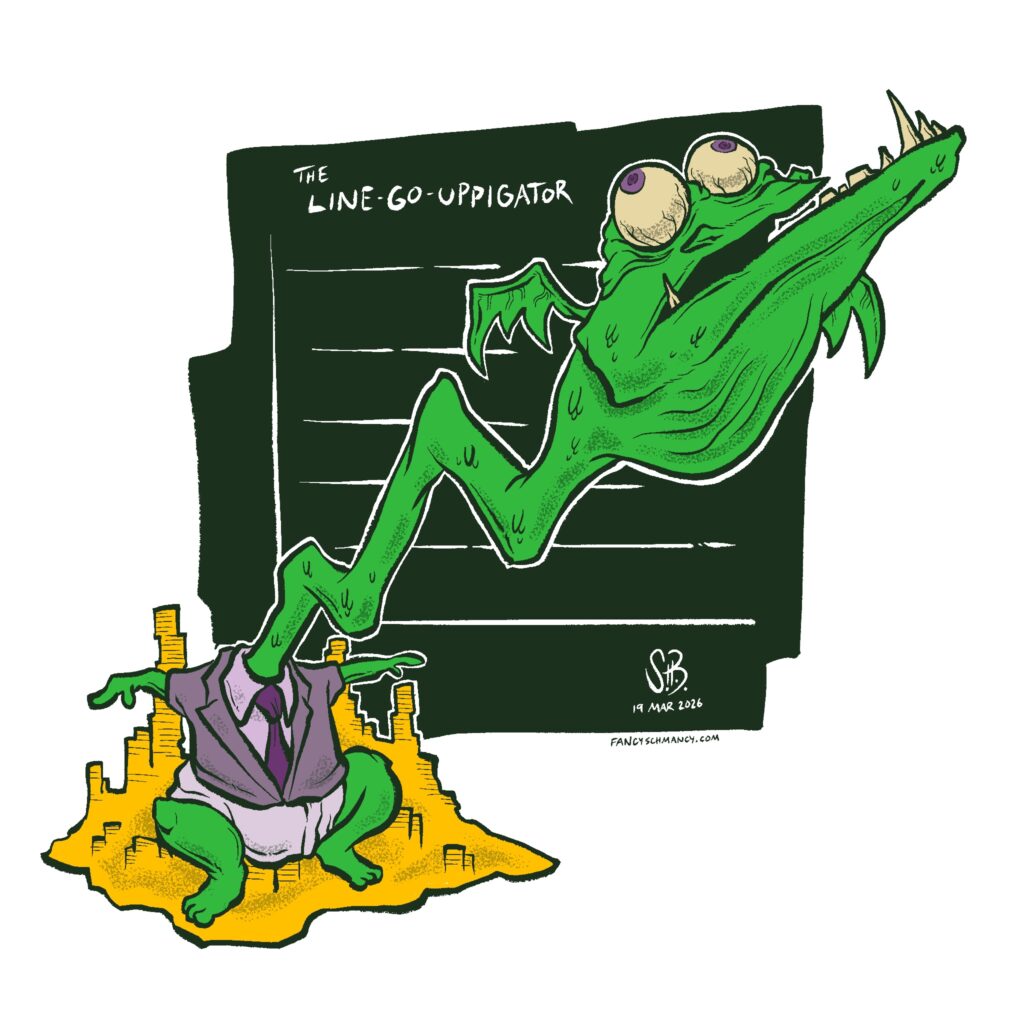
A digital illustration of a creature called the Line-Go-Uppigator, a dragon-like animal with a large under bite and a neck zigzagging towards the sky. It sits on a pile of gold and has a body like a baby with a business suit.

The Line-Go-Uppigator, or reptilius adlunamus, is a serpentine dragon with a zigzagging neck that grows indefinitely towards the moon. Its eyes and snout are locked in a permanent upward tilt as it hungers for the gems in the night sky. Meanwhile, its malnourished body remains seated on its hoard of gold in a state of inert and infantile fragility. One assumes that the vertebrae in its neck will eventually give way to gravity, but really, what about dragons was ever rational?

The Pugnacious Pigcock

The Pugnacious Pigcock is an irascible avian-porcine hybrid with a proclivity for displays of feckless aggression. When provoked, it flourishes a tail made of red-tipped elliptical feathers, which have evolved to mimic the appearance of human warheads. But don’t let the pageantry fool you. Despite its flared eyes and menacing snort crow, its blunted herbivore tusks are little threat to any who encounters them. One is more likely to be harmed by its ceaseless flatulence than anything else.

Vibe Coderpillar | The FancySchmancy Creature Feature

In a parallel world dominated by generative AI, the Vibe Coderpillar has evolved to become the ultimate cybernetic lifeform. It has grown two single-digit appendages for blindly typing prompts into a keyboard (that may or may not be plugged in), plus two fleshy claws exclusively for grasping their favorite brand of Blazing Hot Cheez-ohs. Its nose is upturned with an irrevocably smug smile and a VR headset permanently fused to its face. At present, the bank passwords of the entire Vibe Coderpillar civilization have been exposed to interplanetary hackers, and their collective funds are being diverted into extraterrestrial crypto accounts.