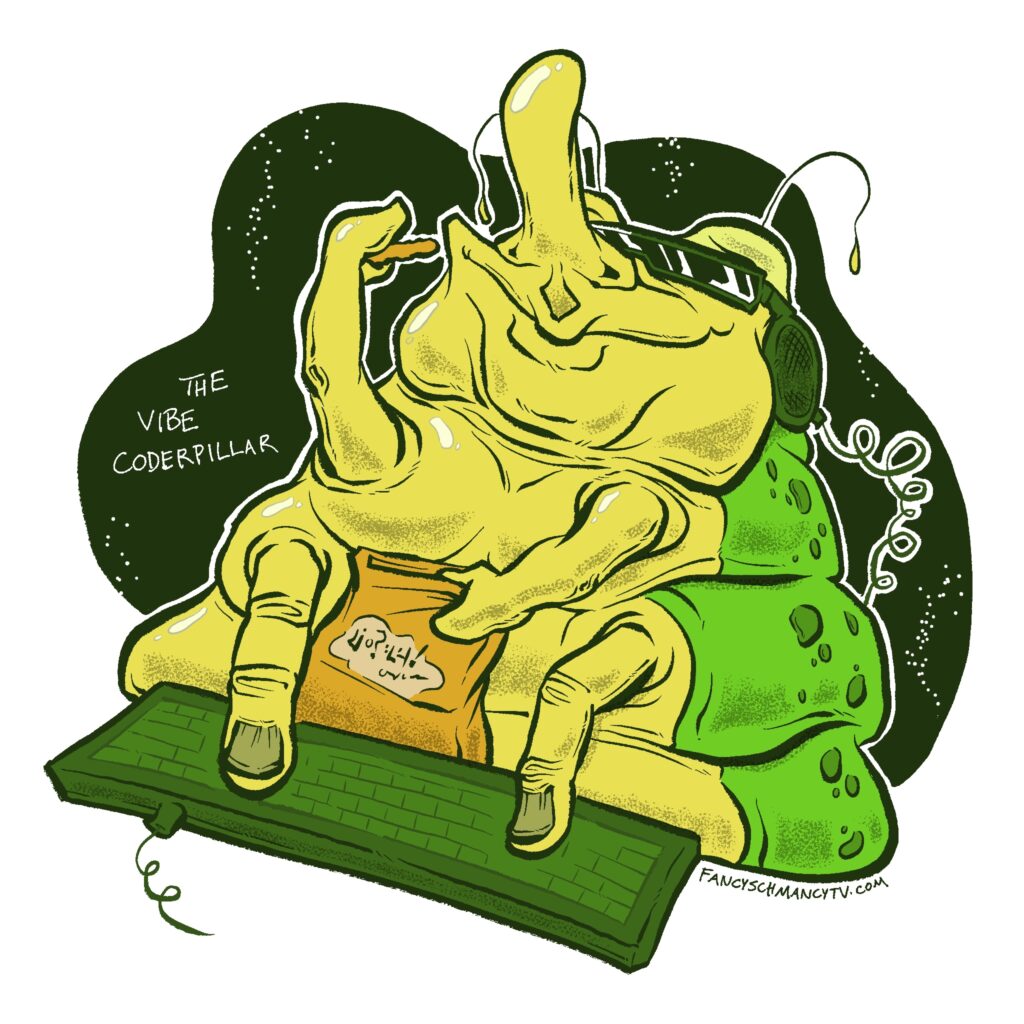
In a parallel world dominated by generative AI, the Vibe Coderpillar has evolved to become the ultimate cybernetic lifeform. It has grown two single-digit appendages for blindly typing prompts into a keyboard (that may or may not be plugged in), plus two fleshy claws exclusively for grasping their favorite brand of Blazing Hot Cheez-ohs. Its nose is upturned with an irrevocably smug smile and a VR headset permanently fused to its face. At present, the bank passwords of the entire Vibe Coderpillar civilization have been exposed to interplanetary hackers, and their collective funds are being diverted into extraterrestrial crypto accounts.
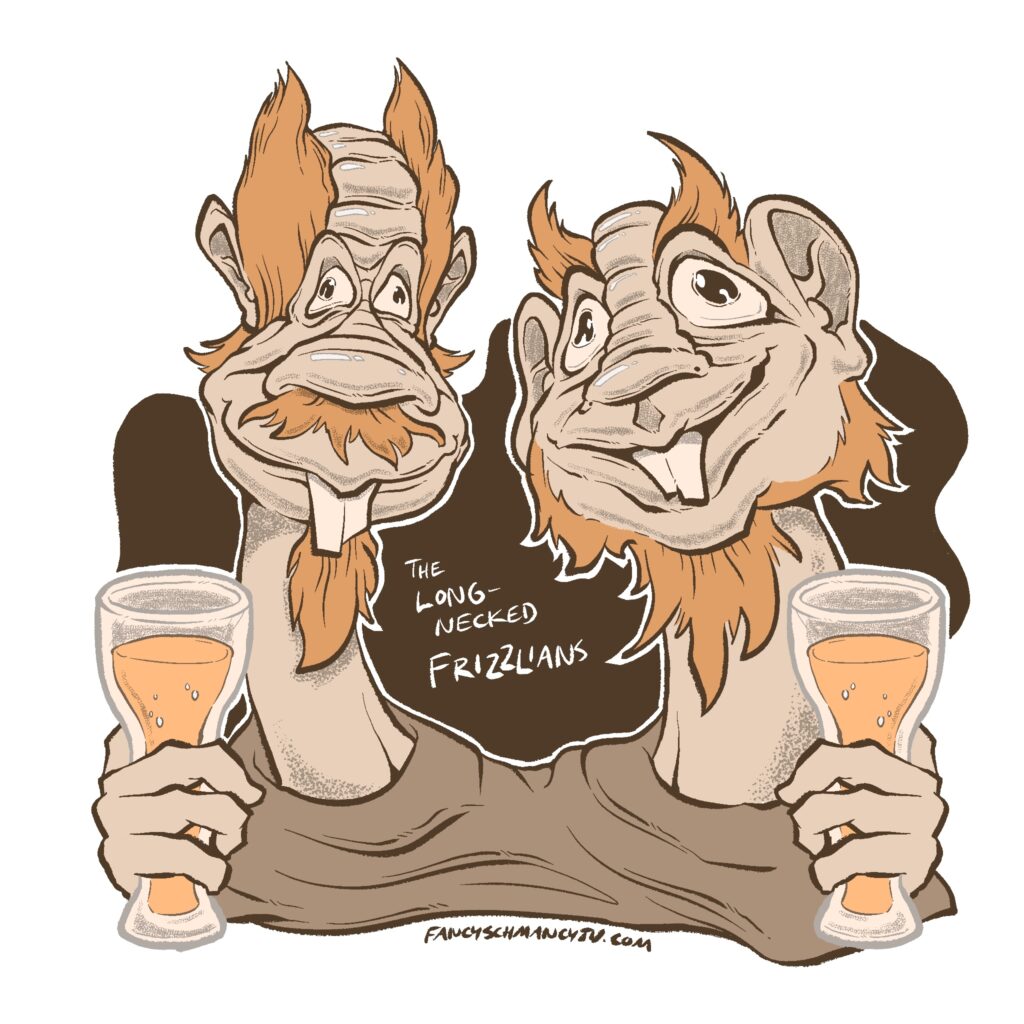
The male lonelinenss epidemic is tough, but I recently discovered a dimension where the men have found a solution. The men of the Long-Necked Frizzlians were once isolated from one another by centuries of emotional unavailability, until a contingent of them formed a monastic sect in which they modeled healthy male friendships by fusing their torsos to one of their brethren. Now they share homebrewed ale together as well as their inmost thoughts as a single, two-headed entity – all while avoiding direct eye contact. See, gents? It’s that easy.
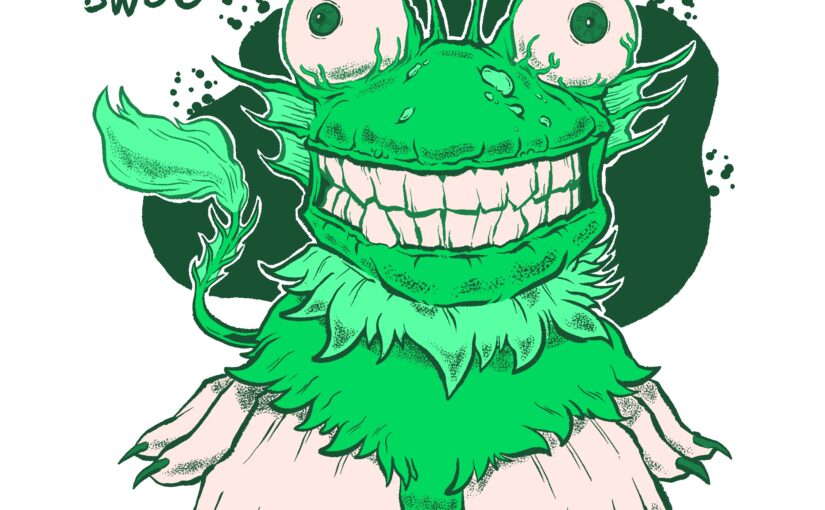
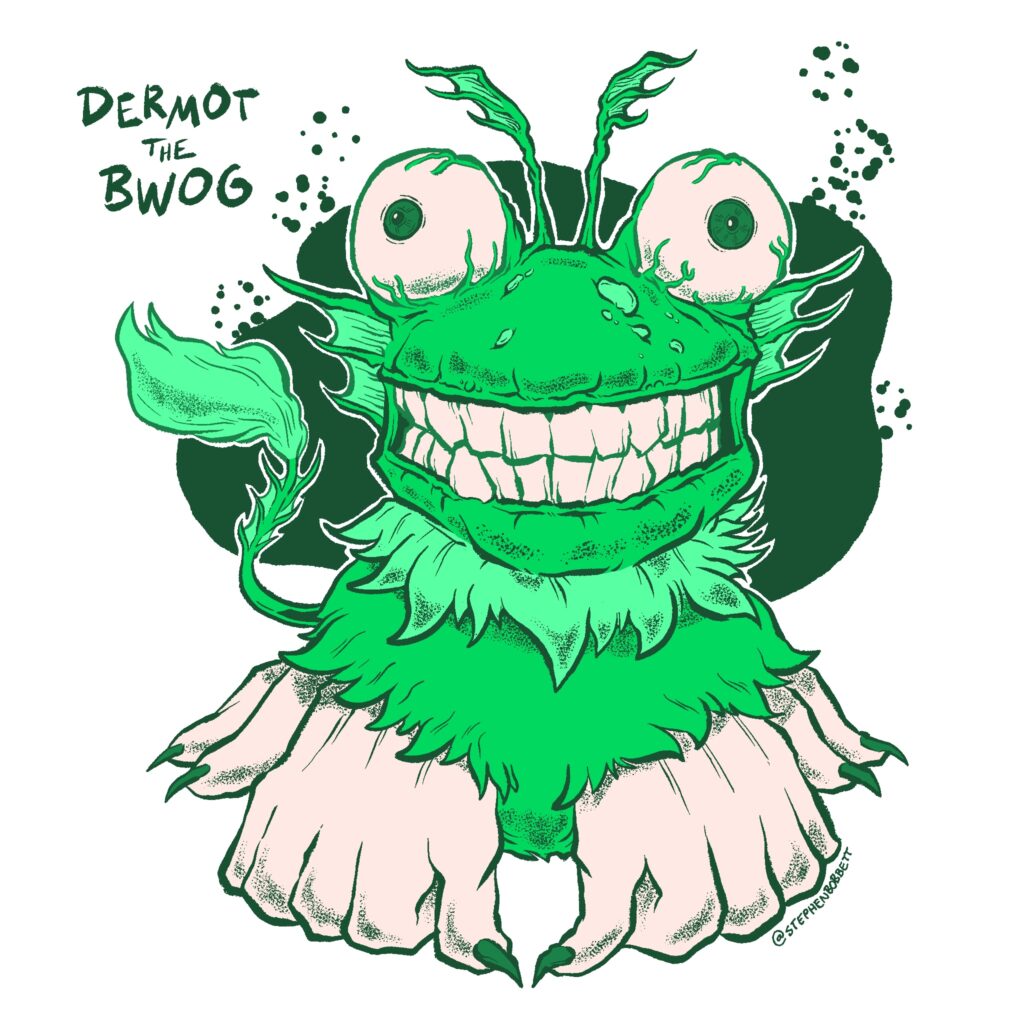
Meet Dermot the Bwog, the latest entry in the FancySchmancy Creature Feature. Not to be confused with any felt-based amphibious puppets. Dermot lives in a sewage treatment plan. He plays the ukelele. His appendages are made of hands from discarded lab cadavers. Dermot likes to sit at the foot of your bed and wait for you to fall asleep, so he can intersperse his mucous-covered fingers between your toes.
A couple of winters ago, I flew home to Boston after a long business trip, sometime after the holidays. It was past midnight, and buses were no longer going to New Hampshire, so I got an Uber to a nearby hotel. The driver was playing a genre of music I haven’t heard since I darkened the doors of evangelical churches when I was younger. It was Contemporary Christian Music, the kind that escapes genre classification, somewhere between a defanged version of U2 pop rock and the saccharine tunes an insurance company might play over an employee training video.
But this recording felt different. It had a crackle to it, like someone ruffling cellophane in the microphone. The voices were breathless and drenched in reverb. Each consonant in the lyrics felt clipped and eroded like a sandblasted cliffside. The vibe was metallic and otherworldly. It felt inhuman.
It took me a chorus, but I figured out this was AI-generated worship music. I said nothing to the driver, since we’d said nothing to each other up until that point. It was none of my business what he listened to in his car. But the music felt profane to me, even as an agnostic.
I don’t sing worship songs anymore, but I know many people who do. There’s supposed to be something sacred to worship songs, even in evangelical churches, where the values and aesthetics of American consumerism tend to water down their potency. Still, when I was a churchgoing kid, I had reasonable certainty that, whether I was singing an old hymn or a CCM hit, a person with a soul devoted to their God had crafted it for me, hoping I could use it to convey the same divine rapture they felt as they wrote it.
No more of that, I guess. In this car, there was no divine connection being offered, just the numbing tones and milquetoast lyrics of a predictive language model. Maybe these computer outputs were bringing the driver closer to God. The computer, however, didn’t give a damn.
This week, my friend and Twitch mod Harukio recommended this video by Adam Neely, exploring Suno AI, the foreboding reincarnation of Italian futurism, and the potential death of recorded music as a medium. I think it’s required watching for anyone who wants to weigh the price of AI-generated music to our brains, our social circles, and our politics. It brought that Uber ride to mind. Thinking of a song as just a unit of consumption drains the blood from it. And we are in the age of digital vampires.
If you’re tired of being drafted into America’s culture wars, too bad. Now you’ve got to pick sides between two default fonts in Microsoft Word.
I’m sorry it’s not Comic Sans and Wingdings. A war between those two would have been a lot more fun to watch, like a birthday clown fighting the aliens from Arrival.
No, we’re talking about the most boring fonts on the planet, Times New Roman and Calibri. You may recognize Times New Roman from the recurring nightmares you have about writing your college essays. Calibri is the one you see in the living nightmare of your current nine-to-five job. Two different fonts, same existential malaise.
But the United States government seems to think one is better than the other, and for the dumbest possible reason.
Rubio cited budget concerns, saying that switching to Calibri cost taxpayers $145,000. Although, does he think switching back to Times New Roman will reverse the cost? It’s not a light switch. That’s not how money works, lil’ guy.
No, the real bogeyman for Rubio is three letters having to do with accessibility. He attributes Blinken’s shift to Calibri as a misguided attempt at (say with me now) diversity, equity, and inclusion.
That’s right, liberals. Fonts are DEI now. Calibri is woke.
Now, you might be thinking to yourself: what the fuck is anyone even talking about anymore? Why are we fighting over fonts? How bad has partisanship gotten in America that a dropdown menu in a word processor is as divisive as the Mason-Dixon line? Are we about to draft Clippy into a civil war? We told him to fuck off so many times, let him retire already.
Yes, debating between Calibri and Times New Roman would be very stupid. Kind of.
So, this all boils down to how easy fonts are to read. The legibility of fonts has been a debate for decades, and much of that debate centers on serif fonts versus sans-serif fonts. Serifs are the little strokes you find at the end of the big strokes, like little feathers at the end of letters. Sans-serif just means no serifs; the feathers have been plucked.
For a long time, the conventional wisdom was that serif fonts were better for reading. Bottom serifs usually corresponded with the baseline of the font, and in theory, this helps your eyes keep track of the current line you’re reading, especially with large bodies of text. It’s sort of like bowling with the bumpers up, if that were acceptable for a fully grown adult.
But the digital era brought the dominance of serif fonts into question, as many programs and websites made sans-serif fonts more prevalent. In fact, the preference for serif fonts may have just been a long-standing cultural bias. A study of elementary school kids in 2002 found no significant difference between serif and sans-serif fonts when it came to reading speed. However, the students did express a strong preference for Comic Sans. Bookmark that, we may come back to it later.
Other studies have shown that it’s more than just serifs that determine legibility. One recent study in 2022 suggests that it has more to do with stroke contrast – in other words, how much difference there is between the thickest and thinnest parts of the letter. (There’s a joke to be made here about being able to see curves from across the room. Somebody else can make it on my behalf.) All that to say, there are likely more characteristics than just serifs that make a font easier to read.
Why do I mention all this? Because to me, the debate between Calibri and Times New Roman isn’t one about what font is more legible than the other. If it were about legibility, politicians would leave the matter to scientists, and given the current body of research, the answer might not be as conclusive as one might prefer.
No, the reason this debate sent me down a rabbit hole is because it feels reflective of so many debates between self-described conservatives and liberals, the neverending battle between bad faith and good intentions.
I have no doubt that when the State Department changed its font to Calibri, somebody in Secretary Blinken’s employ did some precursory research into the usability of fonts. Is it substantiated by the data? Someone with more than a Bachelor’s degree in English and a 3.2 GPA on their college transcripts will have to let me know.
But responding to that change by evoking the spectre of DEI is completely disingenuous. It would be okay for Secretary Rubio to simply say, “I don’t like Calibri, I like Times New Roman.” It would make him the dullest person on the planet, but at least he’d be honest. Blaming the switch on DEI is cynical pandering to a shrinking base of zealots. It’s farting into the wind for a dwindling crowd of people who love the smell of farts. (Not that I’m kink shaming.)
Now, in this case, the appeal to DEI fears is borderline innocuous, but not entirely. If you’re lucky, you will have to deal with legibility issues eventually, because all of us want to live long enough for our vision to go to crap. As a comedian with cerebral palsy Josh Blue says, people with disabilities are “not only the largest minority group, but we’re also the only minority group that you can join at any time.”
My point is, decisions like these could affect you directly, either now or in the future. I’m not advocating for Calibri. I would rather print 50 Shades of Grey on sandpaper and have to read every word aloud as I ate the pages, than go to bat for a font that’s just Helvetica in a bad toupee. But I am saying that if the administration can be this cavalier about a range of conditions that can affect anyone, imagine what they’re doing to disadvantage the most vulnerable among us.
Even as I was writing this essay, the Department of Health and Human Services cancelled millions of dollars of research grants to the American Academy of Pediatrics, a frequent critic of Secretary RFK, Jr. These grants were meant to fund research into things like SIDS, fetal alcohol disorders, and early autism detection. When the department sent them a letter to cancel those grants, guess what they evoked as their justification? DEI, their evergreen scapegoat.
Look, changing the font of government letterhead does not matter in the grand scheme. But the reason for changing it does. It reveals the heart of certain bureaucrats who do not see government as a service to its people, and are instead obsessed with nothing more than image maintenance. Accessibility may not matter to you now, but one day, it will. And when that day comes, you better hope that your elected officials have your back, instead of brushing you aside because you no longer fit the narrative.
Anyway, it would feel unsatisfying if we left the war between Calibri and Times New Roman in a stalemate. So, if we absolutely have to choose between them, I propose we change the official font of all governmental agencies to…
Comic Sans.
Oh, you thought I was kidding about that bookmark? I’m serious, all government correspondence should be in Comic Sans. Let me list the reasons.
First off, hilarious.
Second, in terms of usability, there is at least anecdotal evidence that Comic Sans is helpful for people with dyslexia. The actual research is less conclusive, but again, we’re talking about delivering a subpeona and it’s same font as the hangtag for Beanie Babies. Shut up, nerds, we’re having fun.
Third, can you imagine how terrifying we would be to our enemies if we were typing up sanctions, treaties, declarations of war in Comic Sans? Those are some unhinged psyops right there. Sure, we’d look like a country full of whimsical PTA moms printing flyers for a bake sale – but you know those moms can turn on a dime.
This will be my one and only agenda if I’m ever elected to office. And that doesn’t make America a better place, there’s always Wingdings.