
Since the dawn of video games, one question has plagued both critics and philosophers alike: what if big ape like banana and punch good? Only one game has ventured to answer it.
There’s a primal appeal to Donkey Kong Bananza. One is the simple motivation of its protagonist: one day, ape find shiny banana in cave, so ape punch holes in ground until ape find all shiny bananas.
The other is the raw catharsis of its control scheme. Press X? Ape punch up. Press B? Ape punch down. Press Y? Ape punch walls and faces.
Press A? Ape jump. Ah, see? Ape not just punch. Ape have layers.
And what layers there are. What’s surprising about the game is the weird depth it achieves—narratively, sure, but mostly literally. DK meets Pauline, a young girl with a magical voice but paralyzing stage fright. After a catastrophic cave-in perpetrated by a trio of simian miners known as Void Co., DK and Pauline’s only hope of reaching the surface again is tunneling to the center of the planet. There, a mythical MacGuffin called the Banandium Root will grant Pauline her wish to go home—and DK his wish to decimate the Chiquita supply chain.
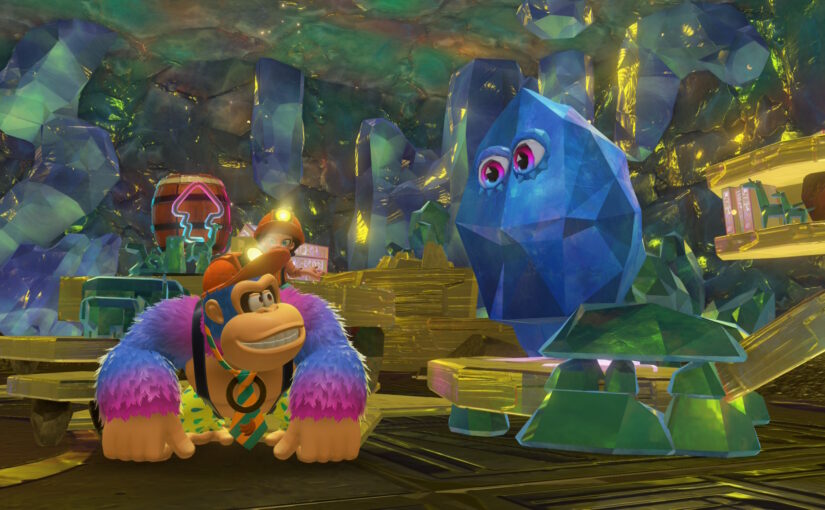
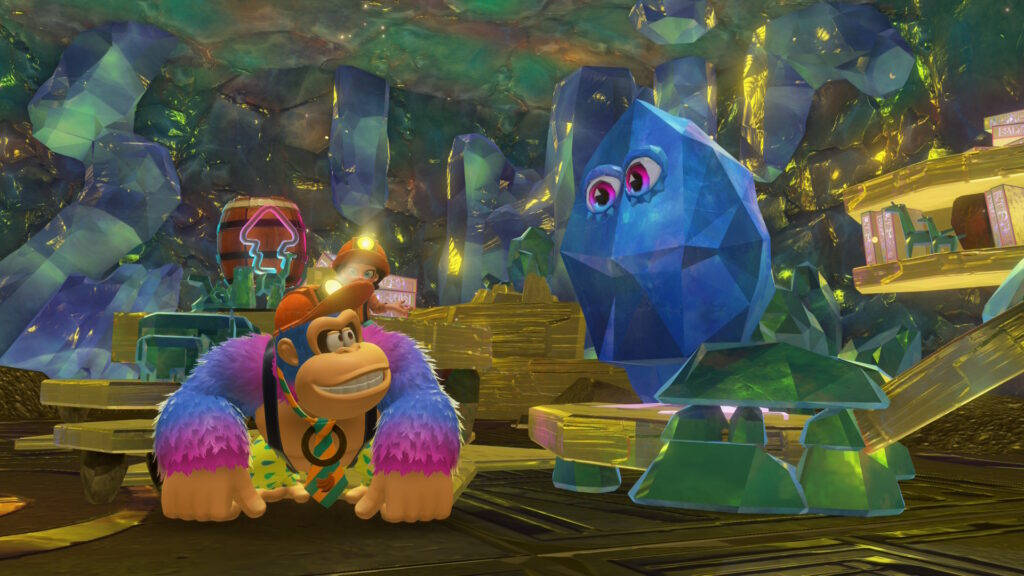
The world-building here is whimsical but rich. DK and Pauline encounter myriad subterranean cultures, from arctic-dwelling zebras to light-carving serpents. Present in every layer are the Fractones, a race of sentient, regenerating crystals. In what feels like a nod to Journey to the Center of the Earth, you can read the history of these cavernous worlds along the way in journals chiseled by the intrepid Exploritone. A chip off the old Jules Verne block.
It’s easy to compare this game to Super Mario Odyssey, since it’s by the same dev team and has a similar aesthetic and collect-a-thon mission style. But whereas Odyssey leans heavily into platforming, Bananza goes all-in on the smash-and-grab dopamine rush of combat and terrain destruction. In the early stages of the game, I worried this meant any fight or puzzle could be circumvented by punching your way through it. Fortunately the fights and puzzles ramp up in difficulty. Yes, you’re still punching your way through them. But you’re punching thoughtfully.
All this culminates in a lengthy finale that’s too good to spoil (if YouTube hasn’t done that for you already). But what I loved most were the simple character arcs that pluck the heart strings as DK and Pauline forge their friendship. Pauline transforming DK through song grows her confidence in her innate gifts, the kind of journey we all wish for the young people in our lives. And DK learns that maybe, just maybe, there is more to ape than just banana.
There’s probably a good lesson in that, too.